Could two people with the same broken arm receive very different compensation? Yes. Searches for the average payout for broken arm scotland suggest there should be one clear figure, but the fracture alone doesn’t determine a claim’s value. Your recovery, any ongoing pain or restricted movement, and the effect on daily life all matter.
It’s understandable to want a realistic estimate, especially if you’re unsure how your recovery or legal fees could affect what you receive. This guide explains how broken-arm compensation is assessed in Scotland, what can affect a claim’s value, and which financial losses may also be included. It covers why medical evidence and proof of expenses matter, and why an online estimate can’t replace an assessment of your circumstances.
General damages for pain and the injury’s impact are different from special damages for losses such as missed earnings and travel costs. If legal fees are a concern, check the agreement carefully. Scotland Claims Injury Lawyers states that clients keep their full settlement without a success fee deduction, subject to the terms of the arrangement. This doesn’t guarantee a particular award, but understanding the fee terms can help you assess what you may keep.
Key Takeaways
- There’s no reliable single figure for the “average payout for broken arm scotland” that predicts what an individual claim may be worth.
- Treatment, recovery time and lasting effects can matter more than the fracture label alone.
- Different recovery experiences and impacts on daily activities can affect an assessment, but each case depends on its evidence.
- Keep a record of the accident and save relevant medical and financial documents.
- Check the no-win, no-fee agreement and how costs work. Scotland Claims states that it deducts no success fee from a client’s settlement, but this doesn’t guarantee a particular award or a successful claim.
What is the average payout for a broken arm in Scotland?
There’s no reliable single average that can predict what your broken-arm claim may be worth. If you’re searching for the average payout for broken arm scotland, treat any figure you find as a broad indication, not a personal estimate. A figure is useful only when it comes from a current, relevant legal source and is explained in context.
Two people can break an arm in similar accidents yet have different outcomes. The fracture, treatment, recovery time and any continuing pain or restriction all matter, as does the evidence of how the injury affected each person. A published bracket is not a promise and doesn’t guarantee a particular settlement.
Why a broken-arm compensation figure is only an estimate
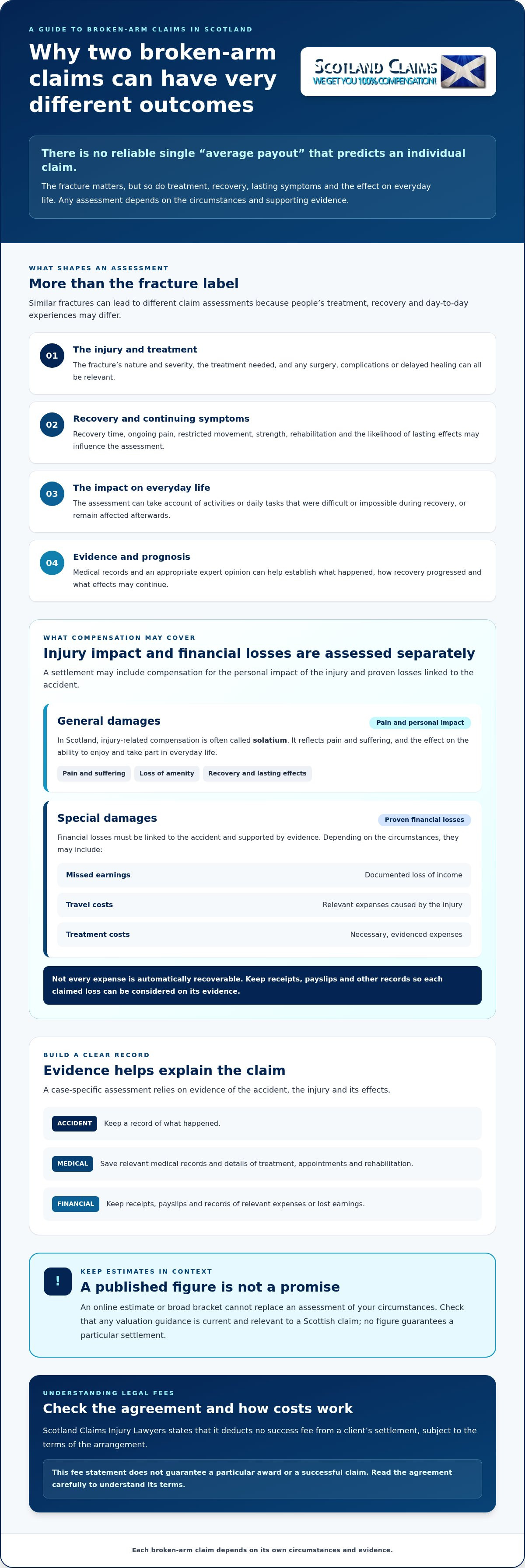
Compensation for the injury itself is assessed separately from financial losses. In Scotland, this injury-related award is often called solatium. It reflects pain and suffering, as well as the effect on your ability to enjoy and take part in everyday life. The injury’s severity and recovery are relevant, including any complications or lasting symptoms.
Financial losses are considered separately. These are often called special damages and must be linked to the accident and supported by evidence. Adding an unverified “average” to a personal estimate can be misleading, so check figures against current guidance and the facts of your case.
What does a broken-arm settlement potentially include?
A settlement may include compensation for the personal impact of the injury and proven losses. Depending on your circumstances, these may include:
- Pain and suffering: the discomfort and distress caused by the fracture and its treatment.
- Loss of amenity: activities or everyday tasks you couldn’t manage, or could only manage with difficulty, during recovery or because of lasting effects.
- Financial losses: documented lost earnings and necessary expenses caused by the injury, such as relevant travel or treatment costs.
Not every expense will automatically be recoverable. Keep receipts, payslips and other records so each claimed loss can be considered on its evidence. Medical evidence and the circumstances of the accident can also help show how the injury affected you.
If court proceedings become necessary, the venue is separate from how compensation is valued. You can read about the All-Scotland Sheriff Personal Injury Court. For information about Scottish injury claims, see injury lawyers in Scotland. A case-specific assessment is needed to understand how these factors may apply to your claim.
How are broken-arm compensation claims valued in Scotland?
A claim is assessed on the injury’s real effects, not simply the name of the fracture. A straightforward break that heals as expected may be valued differently from an injury requiring surgery, involving complications or leaving lasting limitations. The average payout for broken arm scotland isn’t a reliable way to predict your own assessment.
The main factors include the fracture’s nature and severity, treatment, recovery time, complications, ongoing symptoms, impact on everyday activities, prognosis and evidence of future care or financial loss. Medical records and an appropriate expert opinion can help establish these details. Any valuation approach, guidance or case law used should also be checked for its relevance to a Scottish claim.
How fracture type and treatment can affect compensation
An uncomplicated fracture may heal with limited treatment and no continuing problems. A more complex break might need surgery, further appointments or prolonged rehabilitation. These differences can affect an assessment because they may change the pain experienced, the recovery period and the likelihood of lasting effects.
Complications or delayed healing can also affect the assessment. The injury’s likely course should be supported by appropriate medical evidence, rather than assumptions based on the fracture label. A specialist should check current valuation guidance, including any relevant guidelines and Scottish authorities, before applying figures. A general bracket cannot tell you what a particular claim will settle for.
How recovery and future effects influence a claim
Records of follow-up appointments, treatment and rehabilitation can help show how long symptoms lasted and whether movement or strength remained restricted. The effect on everyday activities matters too. For example, difficulty dressing, cooking or doing tasks at work may help explain the injury’s practical impact, provided this is consistent with the medical evidence.
If pain, reduced movement or other symptoms continue, their duration and likely future course may be relevant. In more serious cases, evidence may also be needed about permanent limitations or future care requirements. Don’t treat a possible long-term effect as certain before the medical position is clear. An assessment should reflect what the evidence supports, not what either side assumes.
For an initial indication, you can try the personal injury compensation calculator. Treat any result as a starting point, not a valuation or promise. A case-specific assessment can consider how the medical evidence and your circumstances fit together.
Why two broken-arm claims can have very different payouts
The same fracture doesn’t automatically mean the same compensation. One person may recover quickly and return to normal activities; another may need more treatment, miss more work or experience ongoing restrictions. The assessment depends on the evidence about each person’s injury and its effects, not just the fracture description.
These examples show how relevant factors can differ. They aren’t payout predictions.
| Assessment factor | One possible situation | A contrasting situation |
|---|
| Recovery | Healing follows the expected course. | Recovery takes longer or involves complications. |
| Work | A short absence with a return to usual duties. | More time away or documented loss from reduced duties. |
| Daily life | Temporary difficulty with routine tasks. | Continuing limits on activities, caring responsibilities or hobbies. |
| Evidence | Records describe symptoms and recovery. | Medical and financial records also support ongoing effects or losses. |
Which personal circumstances can change the assessment?
Your job and responsibilities can shape how the injury affects you. A broken arm might make some work tasks difficult, while another role can be adapted. Time off, reduced hours or duties, and resulting lost earnings may be relevant if supported by payslips or employer information.
The same applies outside work. Consider tasks, caring responsibilities and hobbies affected by the injury. A short-lived inconvenience differs from an ongoing restriction, but the impact should be explained and supported by evidence. Two people with similar fractures can therefore have different claims. Searching for the average payout for broken arm scotland won’t establish what your own case is worth.
How the accident circumstances and evidence matter
Responsibility for the accident and the value of the injury are separate questions. Evidence about the accident may help establish how it happened and who was responsible; medical evidence helps explain the injury and its effects. Useful records may include clinical notes, photographs of the scene or injury, details written down soon after the event, and witness names or accounts.
If the injury followed a road collision, keep relevant accident details and records together. Scotland Claims’ personal injury compensation calculator can offer an initial estimate, but it isn’t a valuation or guarantee. A case-specific assessment needs to consider the evidence and circumstances together.
For an initial discussion about your circumstances, you can contact Scotland Claims.
What evidence can help establish a fair broken-arm claim?
Good evidence helps explain both how the accident happened and what the injury has meant for you. Start with your health, then keep a clear record of the accident, treatment and resulting losses. You don’t need a perfect file before asking for advice, but organised information can make it easier to assess your claim.
What to record after an accident causing a broken arm
Seek medical attention promptly. Your health comes first, and the clinical record can document the injury and treatment close to the time it happened. Follow medical advice and keep copies of appointment letters, discharge information and relevant treatment records.
As soon as you’re able, note what happened and gather relevant details, such as:
- The date, location and circumstances of the accident, plus any incident or reference number.
- Photographs of the scene or visible injury, if available, and contact details for anyone who witnessed the accident.
- A brief record of symptoms, appointments, treatment, recovery milestones and tasks that become difficult.
- Receipts for accident-related expenses, payslips showing income changes, and relevant employer records about time away or altered duties.
Keep these records together and update them as your recovery progresses. For example, a note that you struggled with dressing or household tasks may help explain the practical impact, especially when it aligns with the medical evidence. If the accident happened at work, Scotland Claims’ work injury claims guide provides relevant information.
How medical evidence helps explain the injury
Clinical records can show the diagnosis, treatment and symptoms reported during your recovery. An appropriate medical opinion may also address prognosis: how the injury is expected to develop and whether symptoms or limitations may continue. Don’t try to diagnose complications yourself. Tell your treating professional about changes or concerns so they can assess them.
If recovery is ongoing or the long-term position remains uncertain, further medical assessment may be needed before the effects can be understood properly. An early snapshot may not show the full recovery picture. Records of treatment and progress can help clarify what is known and what still needs assessment.
Evidence won’t guarantee a particular result, but it can support a clearer, case-specific assessment. Search results for the average payout for broken arm scotland can’t account for your treatment, recovery or documented losses. A solicitor can review the available information and explain what further evidence may be relevant.
How to pursue a broken-arm claim in Scotland with clear fee terms
Starting a claim usually involves an initial review of what happened, your injury and the available records. If the circumstances support a claim, next steps may include gathering medical and financial evidence, assessing the effects of the fracture and discussing settlement with the other party’s insurer. The evidence and individual facts determine whether a claim can proceed and what it may be worth. No particular outcome is guaranteed.
Scotland Claims states that it works on a no-win, no-fee basis. The firm says it recovers legal costs from the at-fault party’s insurer and deducts no success fee from the client’s settlement. It also states that unsuccessful claimants owe nothing under its arrangement. These terms aren’t a promise of compensation or success. Read the proposed agreement carefully, including how expenses are treated, and make sure you understand its terms before proceeding.
What to check when comparing legal support
Ask the solicitor to explain the agreement in plain language. Confirm whether any success fee or other deduction applies, what happens if the claim is unsuccessful, and whether you could be responsible for expenses. Don’t rely on a headline such as “100% compensation” without checking what it means in the signed terms. Scotland Claims says this means no success fee is deducted from the settlement.
Also check the solicitor’s experience with personal injury claims in Scotland and their regulatory status. Scotland Claims states that it is authorised and regulated by the Law Society of Scotland. Compare the written terms with the headline promise so you understand what you could keep and what obligations may apply.
What happens when you ask Scotland Claims for an assessment?
An assessment should look at the accident circumstances, the medical information available and any documented losses. You can prepare by sharing relevant records and explaining how the injury has affected work and everyday life. The firm can then consider your case individually. Eligibility and potential value can’t be established from a fracture description alone, and an assessment doesn’t guarantee a successful claim.
If you’re comparing the average payout for broken arm scotland, focus on case-specific evidence and clear fee terms rather than a headline figure. Read more about Scottish injury solicitors and the support available.
Get a case-specific view of your next steps
There’s no single figure that can predict the average payout for broken arm scotland for your circumstances. The fracture is only part of the picture. Treatment, recovery, lasting effects and reliable evidence all help shape an individual assessment.
Keep records of your medical care, the accident and any related losses. Then compare legal support by checking the written fee terms, including what happens if a claim doesn’t succeed and whether any deductions or expenses could apply.
Scotland Claims states that clients keep 100% of their settlement, with legal costs recovered from the at-fault party’s insurer. This means no success fee is deducted from the settlement, not that a particular award or successful claim is guaranteed. The firm is authorised and regulated by the Law Society of Scotland. It also has a 24-hour freephone helpline; check its published contact details for the current number.
A case-specific assessment can help you understand how your evidence and circumstances may affect your options. Contact Scotland Claims for a no-obligation assessment and ask any questions you have about the fee terms.
Frequently Asked Questions
Is there an average payout for a broken arm in Scotland?
No single average can reliably predict what you’ll receive for a broken-arm claim in Scotland. The assessment may depend on the fracture, treatment, recovery, lasting effects and proven financial losses. Treat published figures as indicative only, and check that they come from current, relevant Scottish legal guidance. A solicitor can review your medical and accident evidence and explain how these factors may apply to your circumstances.
How much compensation can I claim for a broken arm in Scotland?
The amount depends on the injury’s severity and its effects, not just the words “broken arm”. Treatment, recovery time, ongoing symptoms and documented financial losses may all be relevant. An online estimate isn’t an offer or guarantee. A case-specific assessment should consider the medical evidence, how the accident happened and the losses you can support with records before estimating potential compensation.
Can I claim compensation for a broken arm after a road accident?
You may be able to claim if another party was legally responsible and the evidence supports your case. A broken arm alone doesn’t establish who caused the collision. Keep medical records and details of the accident, including any photographs, witness information or reference details. A solicitor can consider responsibility separately from the injury’s value and explain how both may affect your options.
Does a broken arm claim include lost earnings?
A claim may include income loss caused by the injury if it can be established and supported by evidence. Keep payslips and employer records showing time away from work, reduced hours or changes to your duties. Other reasonable accident-related losses may also be relevant, but not every expense is automatically recoverable. Ask a solicitor to review your documents and explain which losses may apply to your circumstances.
How long does a broken-arm compensation claim take in Scotland?
There’s no fixed timeframe for every Scottish claim. Progress may depend on whether responsibility is disputed, how long recovery takes and whether the necessary evidence is available. If the medical position is still uncertain, assessing the injury’s full effects may be more difficult. Ask your solicitor which steps remain and what may affect progress. Check current Scottish limitation guidance promptly rather than relying on a general online timeframe.
Do I have to pay legal fees if my broken-arm claim is unsuccessful?
Scotland Claims states that it operates on a no-win, no-fee basis and that unsuccessful claimants owe nothing under its arrangement. Check the agreement carefully before signing, including how expenses are handled and whether any circumstances could affect your position. The firm also says it deducts no success fee from a client’s settlement. These terms are specific to the firm and shouldn’t be assumed to apply to every solicitor.
Will I keep all my broken-arm compensation with Scotland Claims?
Scotland Claims states that clients keep 100% of their settlement, with legal costs recovered from the at-fault party’s insurer and no success fee deducted from the client’s award. This describes the firm’s fee model, not a guarantee that your claim will succeed or secure a particular amount. Before proceeding, read the agreement and ask how any case-specific costs or expenses are treated.